- Stok Durumu: Stok Var
- Marka: OEM
- SKU: RBZ.101.361
ESP32 C3 Super Mini Development Board Wifi Bluetooth Type-C Usb
160Mhz 4MB Flash 400kb PSRam MicroPython Arduino Iot ADC I2C SPI UART
No documentation is included with the product. No additional software support will be provided.
Important - new boards come unprogrammed; at the first connection the BOOT button must be held pressed while plugging in the USB cable. The board then starts in programming mode.
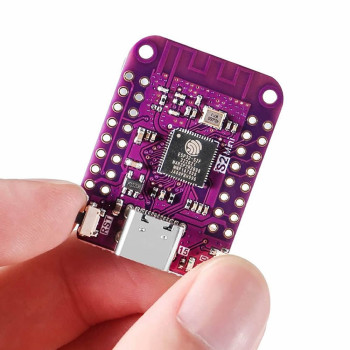
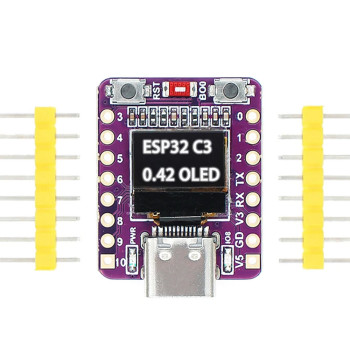
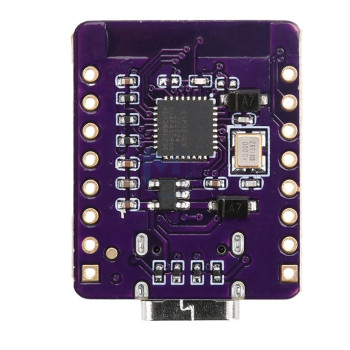
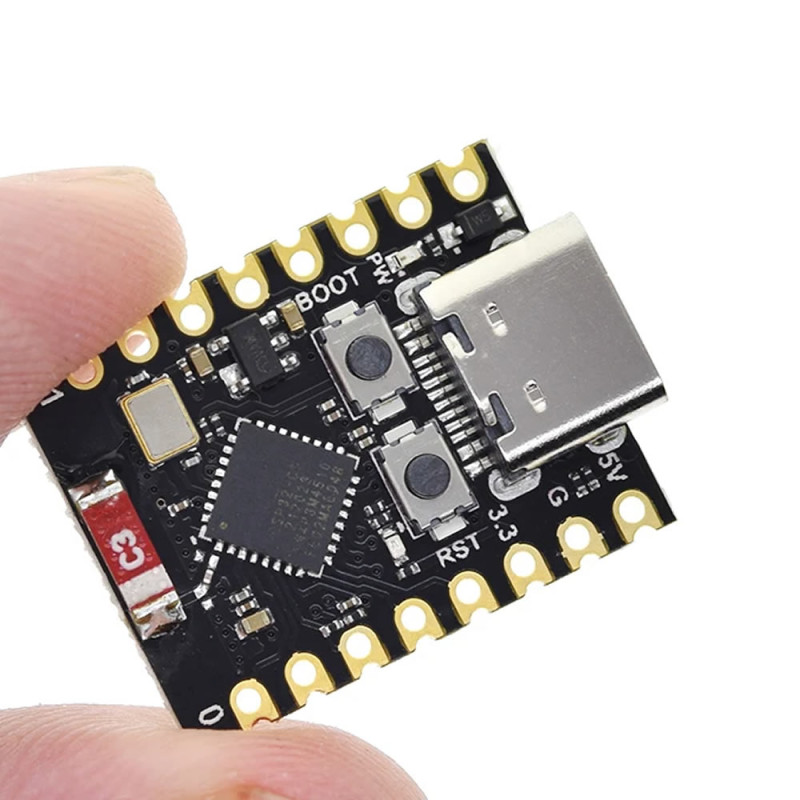
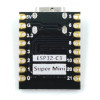
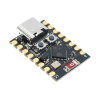
The ESP32-C3 Super Mini is a small Arduino compatible development board that fits the Espressif ESP32-C3 chip on a 22.5mm x 18mm board, with WiFi and Bluetooth 5 (LE) communication. It carries a 32-bit RISC-V single-core processor running at up to 160MHz, 400KB SRAM and 4MB flash memory embedded in the chip. Thanks to the ceramic chip antenna on the board it connects to 2.4GHz WiFi and BLE without a separate antenna.
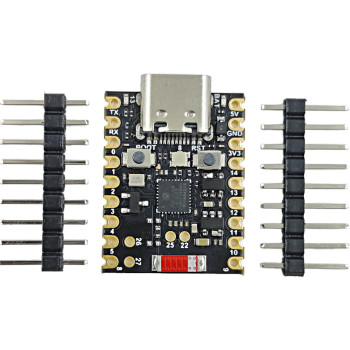
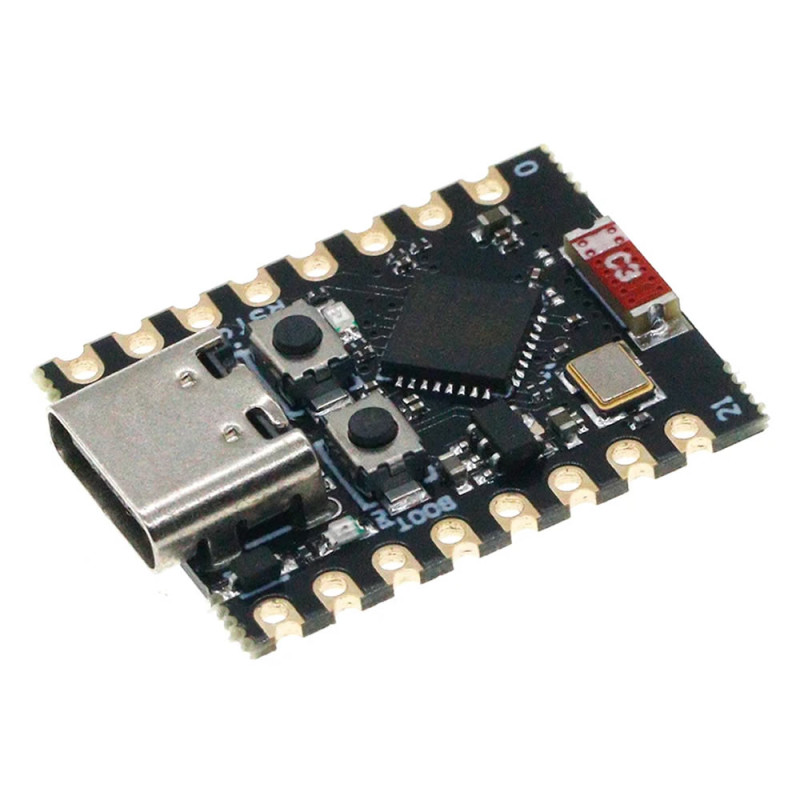
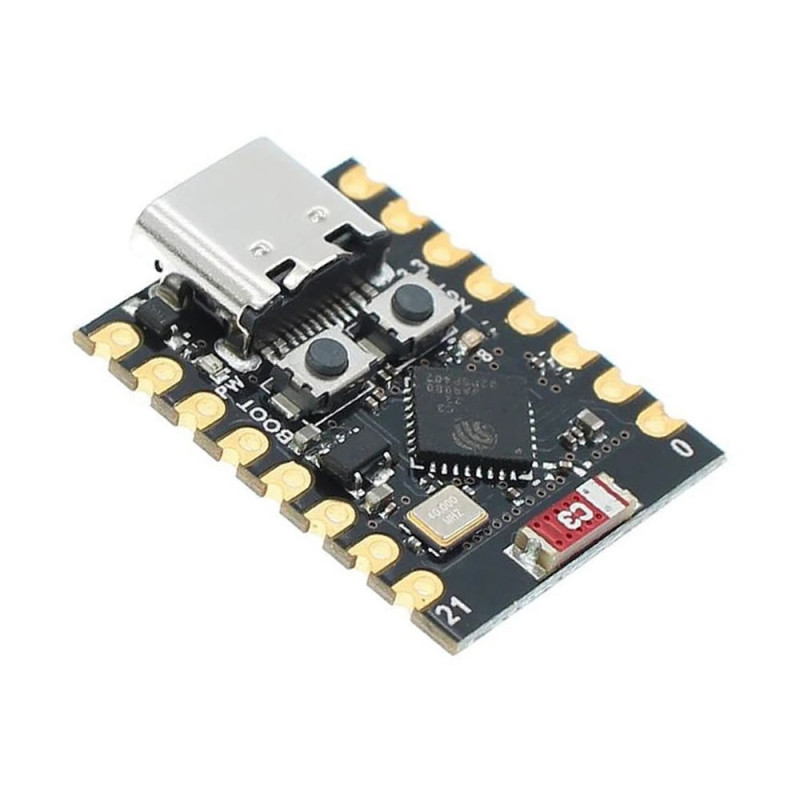
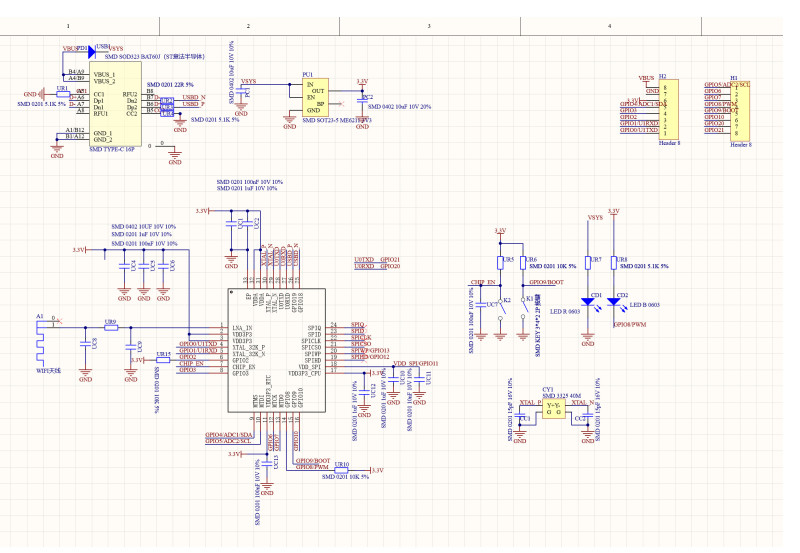
The board is both powered and programmed through its USB Type-C port. Because the built-in USB Serial/JTAG controller of the ESP32-C3 is used, there is no separate USB-serial converter chip on the board; when plugged into a computer, 1 COM port and 1 JTAG device appear automatically. It also runs from an external 5V supply. The board has BOOT and RST buttons, a power LED and 1 user LED connected to GPIO8.
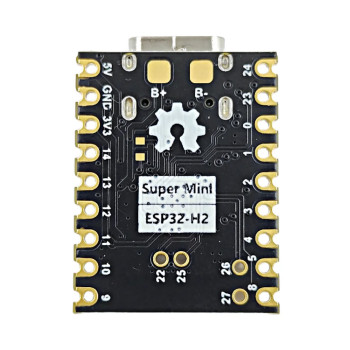
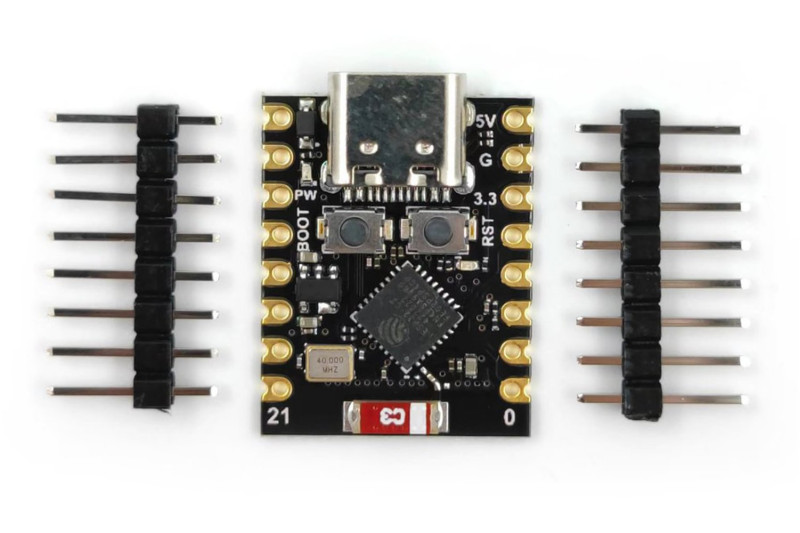
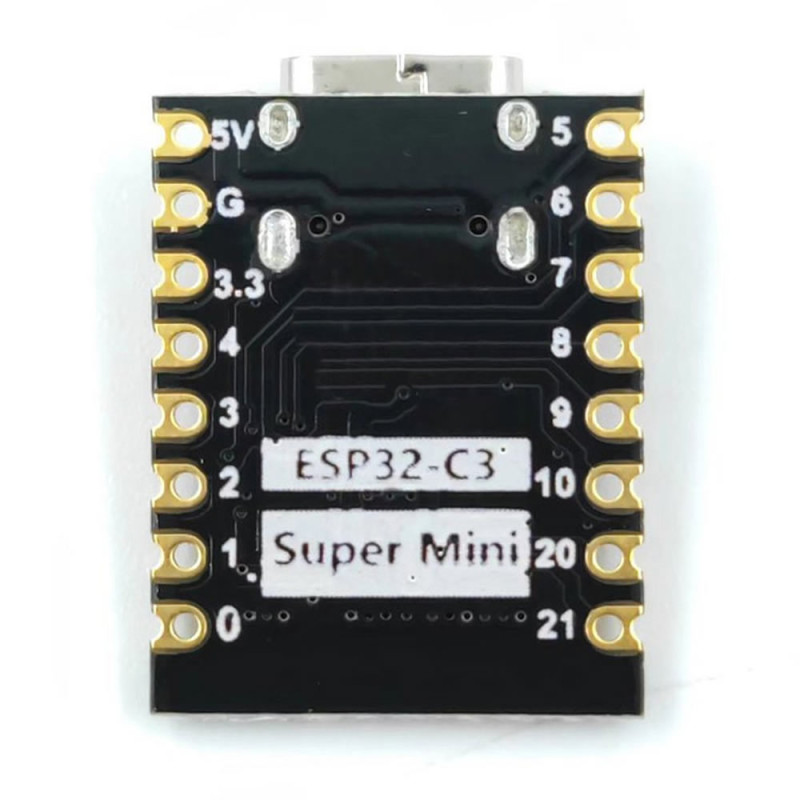
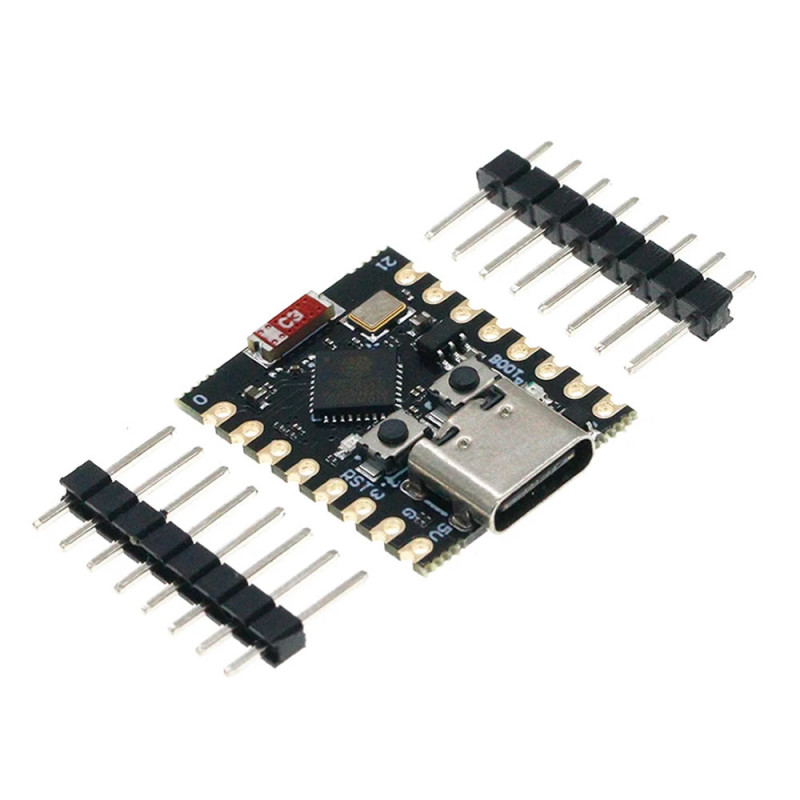
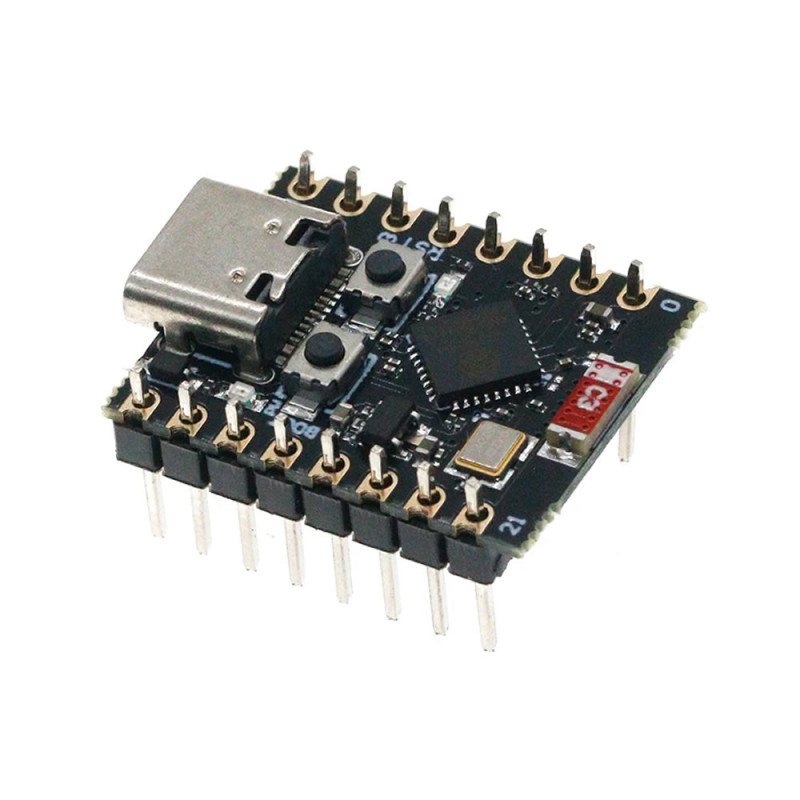
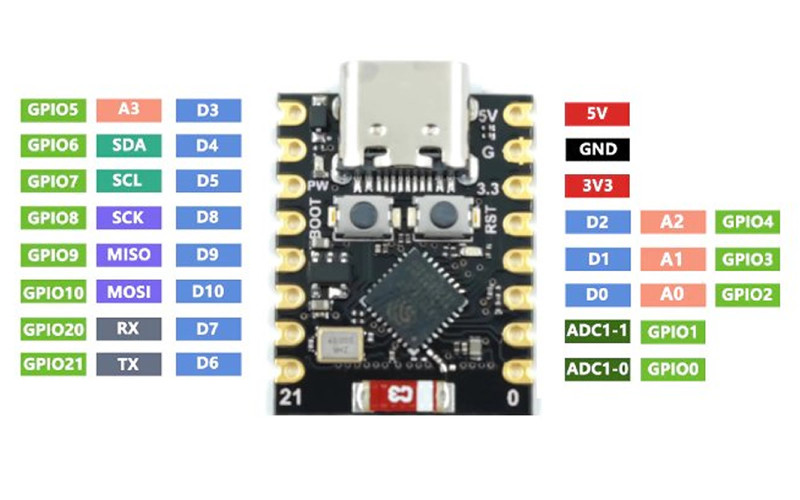
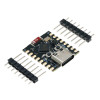
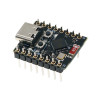
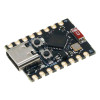
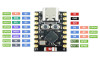
There are 16 pins in total on the two edges of the board; 13 of them are usable GPIOs (GPIO0-GPIO10, GPIO20, GPIO21). The 2 pieces of 8-pin male headers in the package can be soldered into the empty header holes; in addition, the pads are castellated, so the board can be soldered directly onto a carrier board like a surface-mount part. This allows low-profile projects that fit into very small enclosures.
The board is programmed with Arduino IDE, ESP-IDF and MicroPython; with ESPHome it can be turned into a Home Assistant device without writing code. Thanks to its 22.5mm x 18mm size, on-board ceramic antenna and WiFi together with BLE, it suits smart home sensors, wireless relay and thermostat control, wearables and small battery powered devices.
Features:
- Product type: ESP32-C3 based WiFi + Bluetooth development board (Super Mini)
- Model: ESP32-C3 Super Mini
- Microcontroller: Espressif ESP32-C3, 4MB flash in the chip (ESP32-C3FN4; newer batches may carry ESP32-C3FH4 / ESP32-C3FH4X)
- Processor: 32-bit RISC-V single core, up to 160MHz
- Memory: 400KB SRAM, 384KB ROM, 4MB flash (no PSRAM)
- WiFi: 2.4GHz IEEE 802.11 b/g/n (WiFi 4); chip output power up to +21dBm in 802.11b
- Bluetooth: Bluetooth 5 (LE), Bluetooth mesh, 125Kbps long range mode
- Antenna: Ceramic chip antenna on the board
- Inputs/outputs: 13 GPIOs (GPIO0-GPIO10, GPIO20, GPIO21; GPIO20 / GPIO21 are also UART0 RX / TX); 16 pins in total (including 5V, G, 3.3), 2.54mm pitch
- Analog input: 12-bit SAR ADC, 6 channels; reliable readings on GPIO0-GPIO4 (ADC1, 5 channels), GPIO5 (ADC2) is unstable due to a chip erratum
- Interfaces: 2x UART, I2C, SPI, I2S, TWAI (CAN 2.0 compatible), 6-channel LED PWM, RMT; pins (except ADC) can be routed to any GPIO through the GPIO matrix
- USB: USB Type-C, on-chip USB Serial/JTAG controller (no separate USB-serial chip); 1 COM port + 1 JTAG device on the PC
- Power supply: USB Type-C, the 5V pin (5V recommended; sellers state 3.3V - 6V) or a regulated 3.3V on the 3.3 pin; 3.3V regulator on the board; no power switching circuit on the board
- Logic level: 3.3V (GPIOs are not 5V tolerant)
- Buttons and LEDs: BOOT (GPIO9) and RST buttons, PW power LED, 1 blue user LED (GPIO8, lit by LOW)
- Clock source: 40MHz crystal
- Security: Secure boot, flash encryption, AES / SHA / RSA hardware accelerators, random number generator
- Deep sleep: chip 5µA (datasheet); since the power LED stays on, the board draws more
- Software: Arduino IDE (arduino-esp32), ESP-IDF, PlatformIO, MicroPython, ESPHome
- Operating temperature: -10°C - 65°C
- Pad structure: Castellated edge pads; soldered with headers or directly onto a carrier board
- Colour: Black PCB
- Dimensions: 22.5mm x 18mm x 4.5mm (including USB Type-C)
- Weight: about 2gr
Usage information:
- Arduino IDE: add https://raw.githubusercontent.com/espressif/arduino-esp32/gh-pages/package_esp32_index.json to Preferences > Additional Boards Manager URLs, install the "esp32" package from the Boards Manager and select "ESP32C3 Dev Module" as the board. For serial port output, set "USB CDC On Boot" to Enabled in the Tools menu.
- Programming mode: when using the board for the first time or when an upload fails, plug in the USB cable while the BOOT button is pressed. With the board plugged in, hold the BOOT button, press and release the RST button, then release the BOOT button; the board enters programming mode. Press the RST button when the upload is finished.
- MicroPython: with the Thonny program from thonny.org you can flash the MicroPython firmware for the ESP32-C3 and program the board directly in Python.
- The user LED is connected to GPIO8 and uses inverted logic (LOW turns it on, HIGH turns it off); as a first test you can set this pin as an output and blink the LED.
Software support:
- microsoft.github.io/devicescript/devices/esp32/esp32c3-supermini
- waveshare.com/wiki/ESP32-C3-Zero
- espressif.github.io/esp32-c3-book-en/
Areas of use:
- IoT and smart home devices (ESPHome, Home Assistant)
- Wireless sensor nodes over WiFi (temperature, humidity, air quality)
- WiFi controlled relays, sockets and lighting
- Thermostat and climate control systems
- Wearable and small battery powered devices
- Robot and vehicle projects controlled over BLE
- Datalogger and remote monitoring
- BLE beacon and proximity detection
- TWAI (CAN) communication prototypes with an external transceiver
- Education, STEM and maker projects
Precautions:
- The GPIOs are at 3.3V logic level. Do not connect sensors or modules with 5V signals without a level shifter; the chip may be damaged.
- In some batches the WiFi connection may stay weak or drop (the antenna sits very close to the crystal, supply fluctuations). In that case lower the WiFi output power: in Arduino WiFi.setTxPower(WIFI_POWER_8_5dBm) after WiFi.begin(), in ESPHome output_power: 8.5dB. Keep metal, wires and headers away from the antenna; wires connected to the GPIO20 / GPIO21 pins on the antenna side can affect the antenna.
- The board draws high peak current during WiFi transmission. A poor USB cable or a weak power supply makes the board restart; if needed add a 10µF - 100µF capacitor between 5V and G.
- GPIO2, GPIO8 and GPIO9 are boot (strapping) pins; GPIO8 drives the on-board LED and GPIO9 is wired to the BOOT button. Do not connect circuits that change their level at power-up; otherwise the board may not boot or may stay in programming mode.
- The board has no power switching circuit; while the USB cable is plugged in, do not feed the 5V or 3.3 pin from another supply, use only one power source at a time. Otherwise the board or the computer's USB port may be damaged.
- Do not apply more than 6V to the 5V pin; feed the 3.3 pin only with a regulated 3.3V.
Package contents:
- 1 Piece ESP32-C3 Super Mini
- 2 Pieces 8 Pin Male Header (unsoldered)
- Note: USB Type-C cable is not included in the package.