- Stok Durumu: 10-15 Days
- Marka: OEM
- SKU: RBZ.100.073
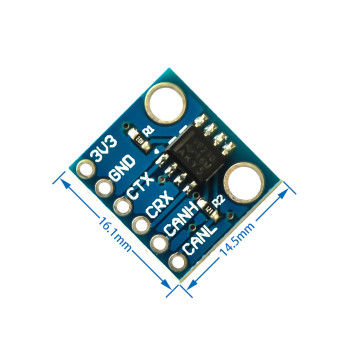
SN65HVD230 CAN Network Communication Module
CAN Network Transceiver Terminal Block Sockets Car Automation Control Systems Sensors Motor Control
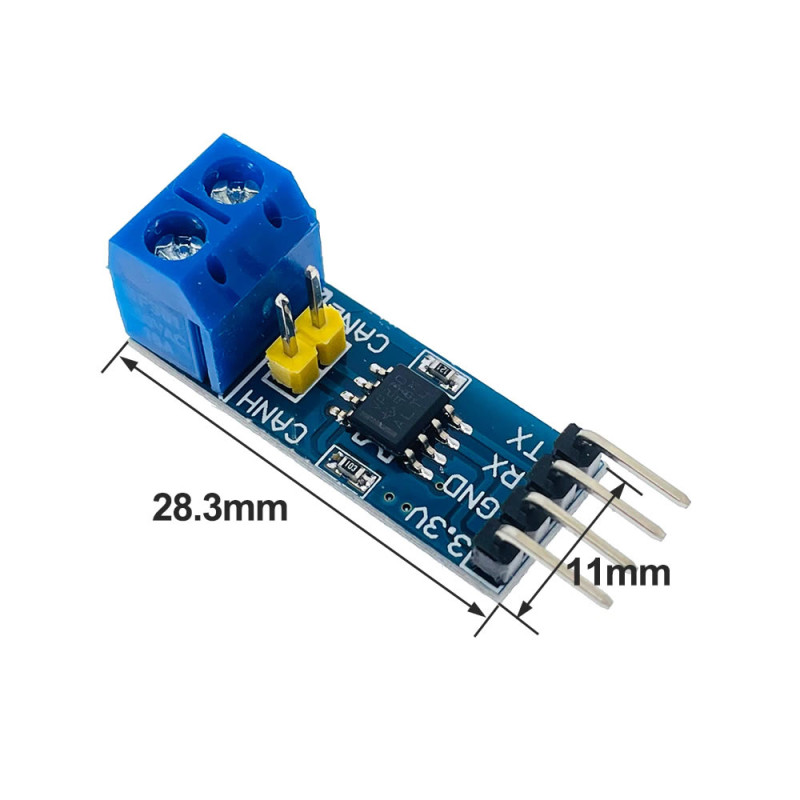
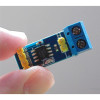
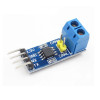
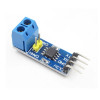
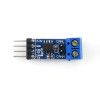
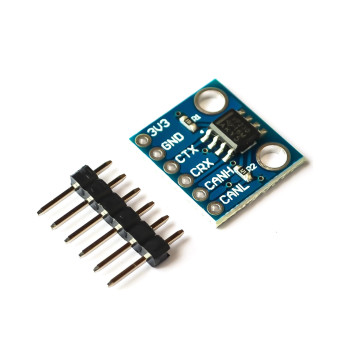
The SN65HVD230 CAN DIP module is a 3.3V CAN bus transceiver board built with the Texas Instruments SN65HVD230 IC. It converts the TX / RX logic signals from the microcontroller's CAN controller into CANH / CANL differential signals on the CAN bus, and brings the data received from the bus back to logic level. It complies with the ISO 11898-2 high-speed CAN standard, runs at data rates up to 1Mbps and, thanks to its high input impedance, can be used with up to 120 nodes on the same bus.
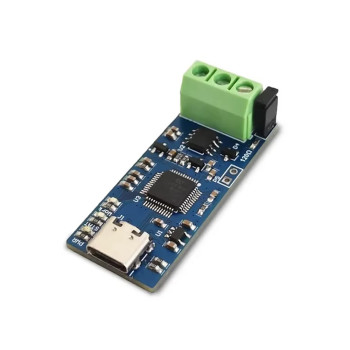
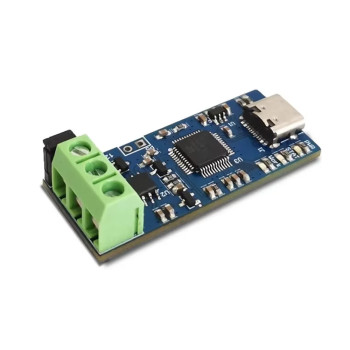
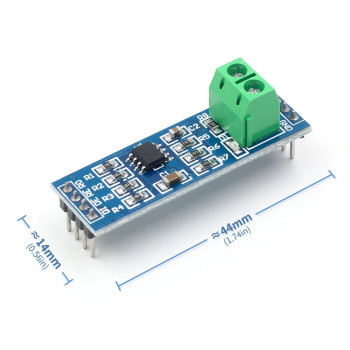
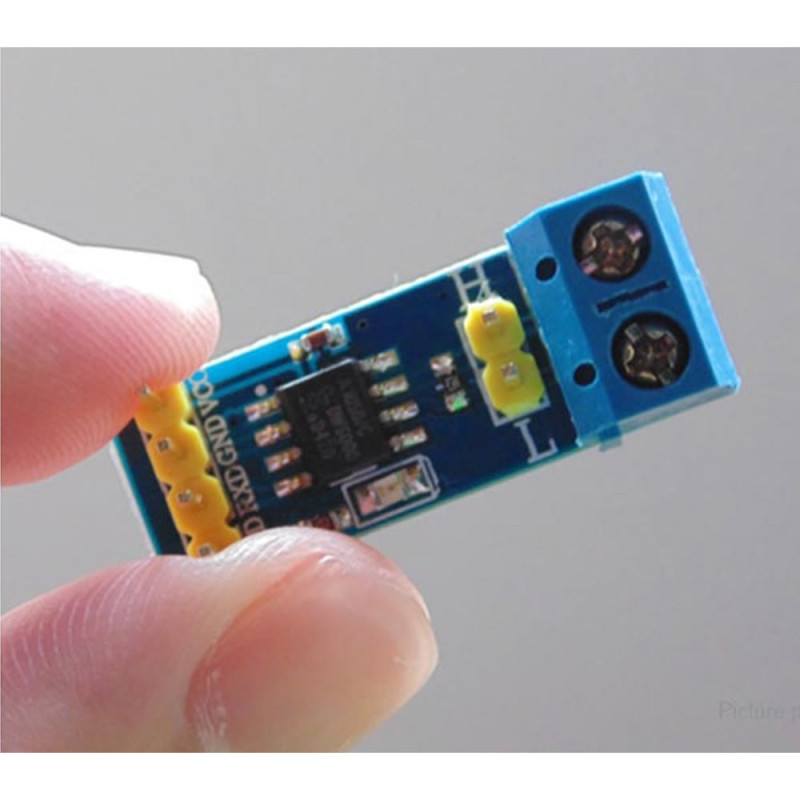
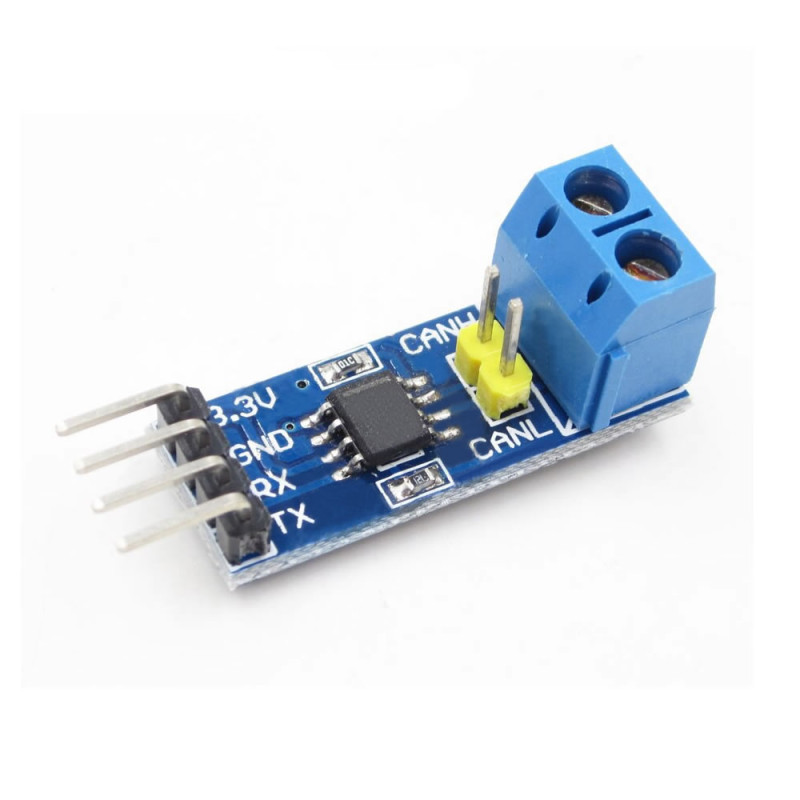
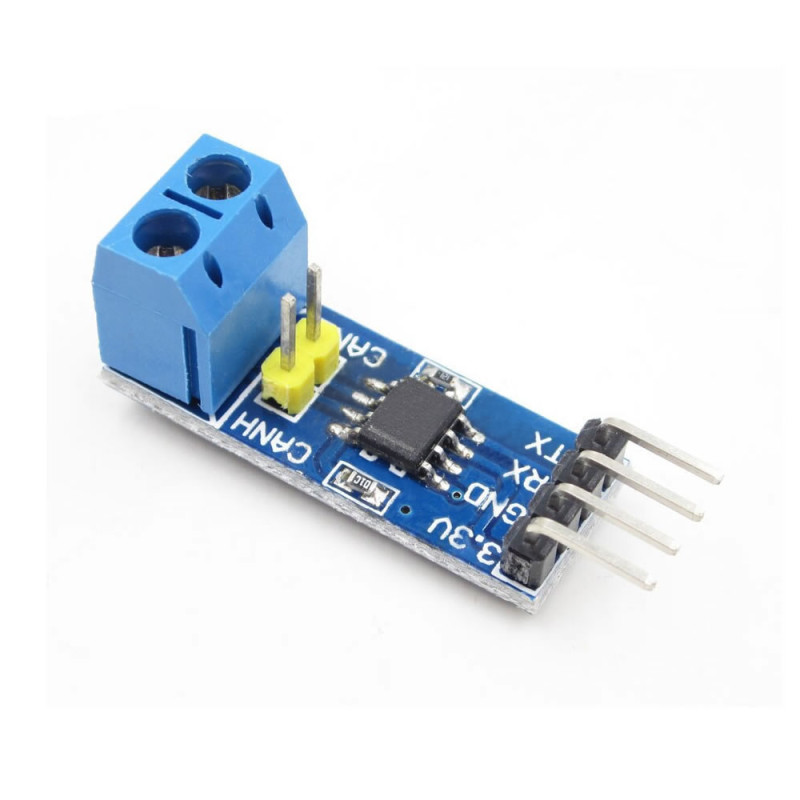
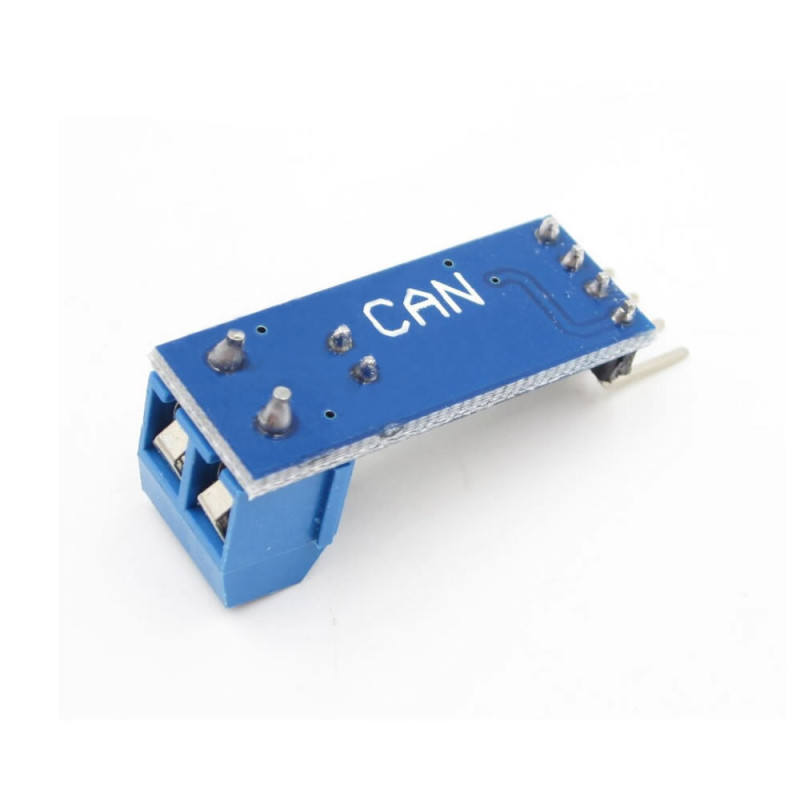
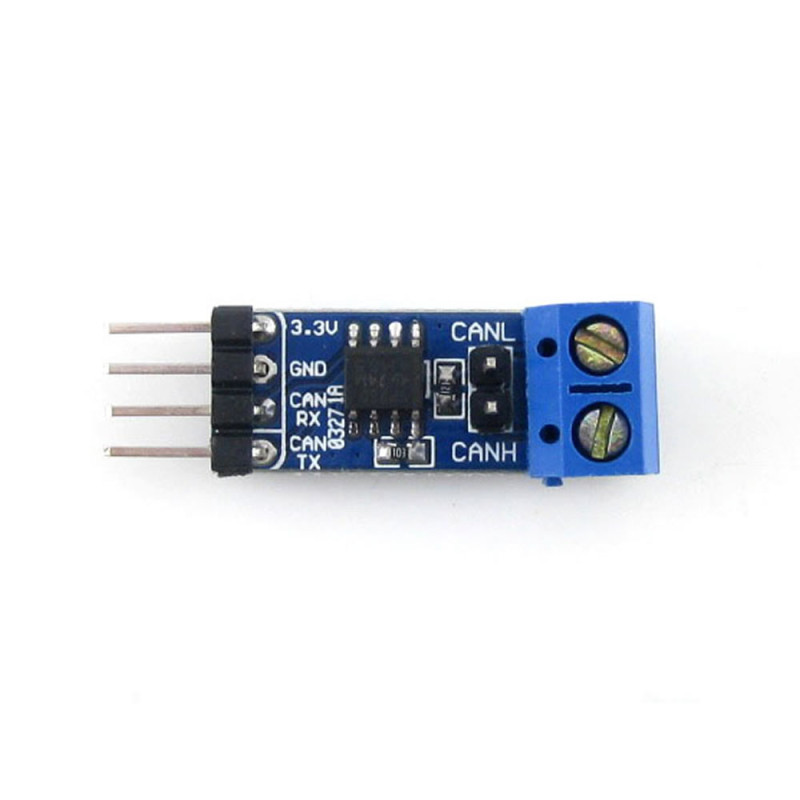
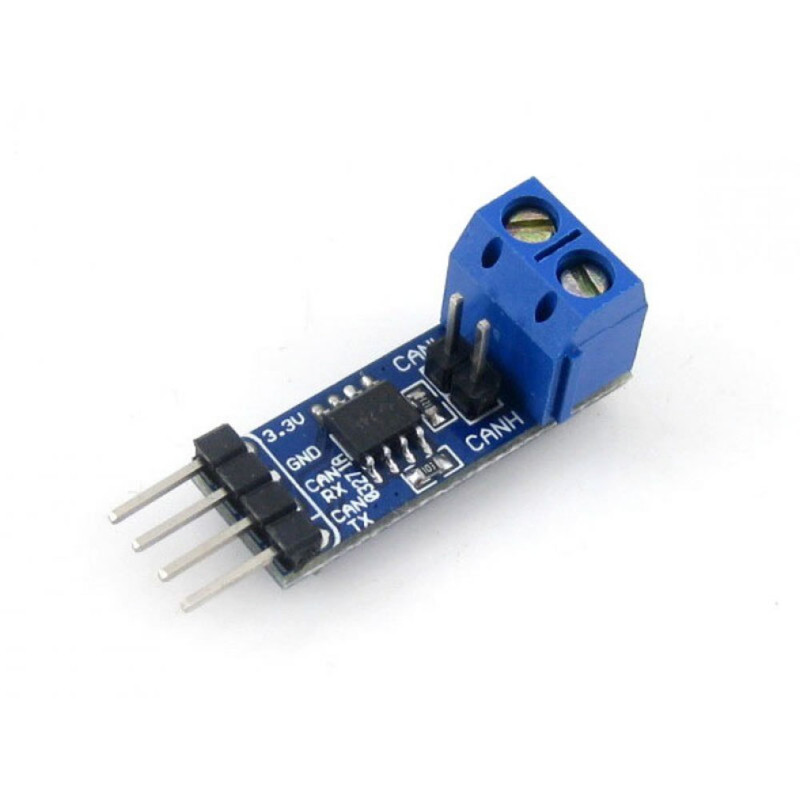
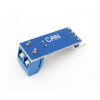
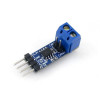
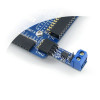
One end of the board has a 4-pin 90 degree male header (3.3V, GND, RX, TX) for the controller connection, the other end has a 2-way screw terminal block for the CAN bus and a 2-pin male header (CANH, CANL) on the same lines, so bus wires connect without soldering. The IC has ESD protection exceeding 16kV on the bus pins, thermal shutdown and an open-circuit fail-safe design, and it does not disturb the bus while powering up or down. The small 28.3mm x 11mm board is used with microcontrollers that have a built-in CAN controller in vehicle, industrial automation and robot networks.
Key features:
Runs directly on 3.3V: Works from a single 3.3V supply and connects to 3.3V logic controllers without an extra level shifter.
High-speed CAN: ISO 11898-2 compliant and supports data rates up to 1Mbps; used with CAN based protocols such as CANopen, DeviceNet and CAN Kingdom.
Suits crowded buses: Its high input impedance allows up to 120 nodes on the same CAN bus.
Protected bus input: CANH / CANL pins have ESD protection exceeding 16kV, thermal shutdown and an open-circuit fail-safe design.
Solderless bus connection: CAN bus wires are clamped into the screw terminal block; the controller side plugs into jumper wires or a board through the 90 degree male header.
Features:
- Product type: CAN bus transceiver module
- IC: Texas Instruments SN65HVD230 (SOIC-8, marked VP230)
- Supply voltage: 3.3V (IC operating range 3V - 3.6V)
- Data rate: up to 1Mbps
- Standard: ISO 11898-2 (high-speed CAN physical layer)
- Number of nodes: up to 120 nodes on the same bus
- Controller interface: TX (driver input) and RX (receiver output) logic lines; connects to the microcontroller's CAN controller
- Bus interface: CANH and CANL differential bus
- ESD protection: exceeding 16kV on bus pins (HBM)
- Bus pin voltage limit (absolute maximum): -4V - 16V
- Common mode voltage range: -2V - 7V
- Protection: Thermal shutdown (driver turns off at overtemperature), open-circuit fail-safe design
- Power up / power down: Glitch-free power up and power down (can be connected to a live bus)
- Protocol support: CANopen, DeviceNet, CAN Kingdom
- IC compatibility: Pin compatible, low-power replacement for PCA82C250
- Controller connection: 4-pin 90 degree male header (3.3V, GND, RX, TX), 2.54mm
- Bus connection: 2-way screw terminal block (CANH, CANL) and 2-pin male header (CANH, CANL)
- Operating temperature: -40°C - 85°C (IC)
- Colour: Blue PCB, blue terminal block
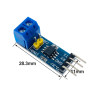
- Dimensions: 28.3mm x 11mm x 12mm
- Weight: 3gr
Usage information:
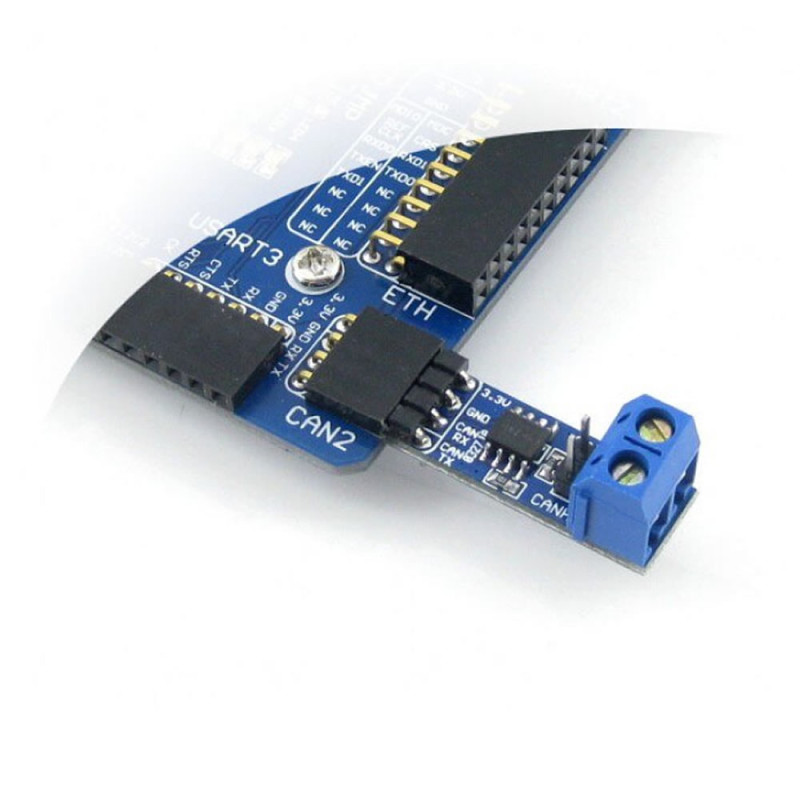
- Connect the 3.3V pin to a 3.3V supply and GND to the controller GND. Connect the TX pin to the microcontroller's CAN TX output and the RX pin to its CAN RX input (not crossed as in UART).
- Connect CANH on the terminal block to CANH of the other nodes and CANL to CANL; use twisted pair cable on long buses. Both physical ends of the bus must have 120Ω termination (about 60Ω is measured between CANH - CANL with power off).
- Set the same data rate on all nodes of the bus (e.g. 125kbps, 250kbps, 500kbps, 1Mbps); nodes cannot communicate if the rates do not match.
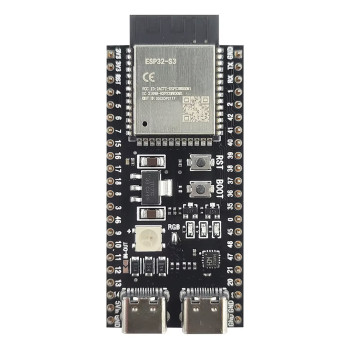
- It is used with microcontrollers that have a built-in CAN controller: the TWAI unit of the ESP32, ESP32-S3 and ESP32-C3, the bxCAN / FDCAN unit of STM32 devices that have a CAN peripheral, and similar.
Application areas:
- Car CAN bus (OBD) data reading and monitoring
- Industrial automation, PLC and field device communication
- Motor driver and servo driver networks
- Battery management system (BMS) communication
- Robot and AGV (automated guided vehicle) internal communication
- Agricultural and construction machinery CAN networks
- Electric vehicle and in-vehicle control projects
- Sensor and distributed control node networks
- CANopen and DeviceNet device development
- CAN bus experiments in training laboratories
Precautions:
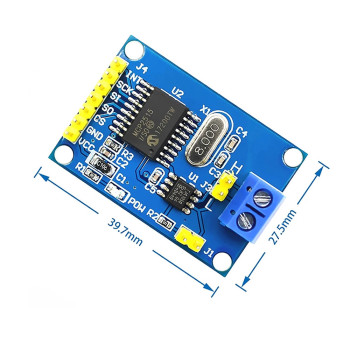
- This module is not a CAN controller, it is only a transceiver. It cannot be used directly with boards without a built-in CAN controller (e.g. Arduino Uno); such boards need a module with a CAN controller such as MCP2515.
- Supply is 3.3V; do not apply 5V. Use a level shifter on the TX / RX lines with 5V logic controllers.
- The board carries a resistor coded 121 (120Ω). Before using the module at a node in the middle of the bus, measure between CANH - CANL with power off; extra termination lowers the total bus resistance and disturbs communication.
- The maximum data rate is 1Mbps; it is not suitable for the high-speed data phase of CAN FD.
- Do not swap the CANH and CANL wires; a node with reversed wires cannot communicate with the other nodes on the bus.
Package contents:
- 1 x SN65HVD230 CAN DIP Module
- 1 x 2-way screw terminal block ( Assembled )
- 1 x 4-pin 90 degree male header ( Assembled )
- 1 x 2-pin male header ( Assembled )
- Note: Microcontroller board, connection wires and CAN bus cable are not included in the package.