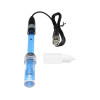
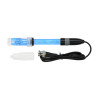
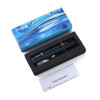
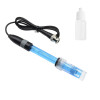
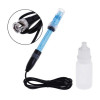
- Stok Durumu: Stok Var
- Marka: OEM
- Model: PH Elektrot Prob E201-1C
- SKU: RBZ.101.022
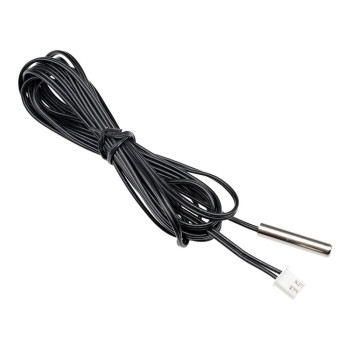
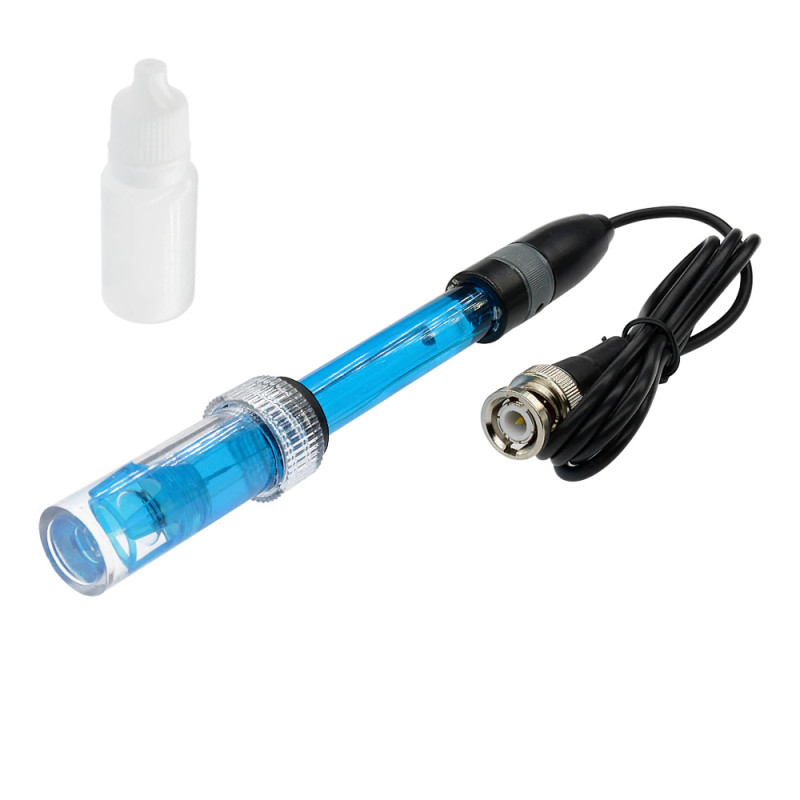
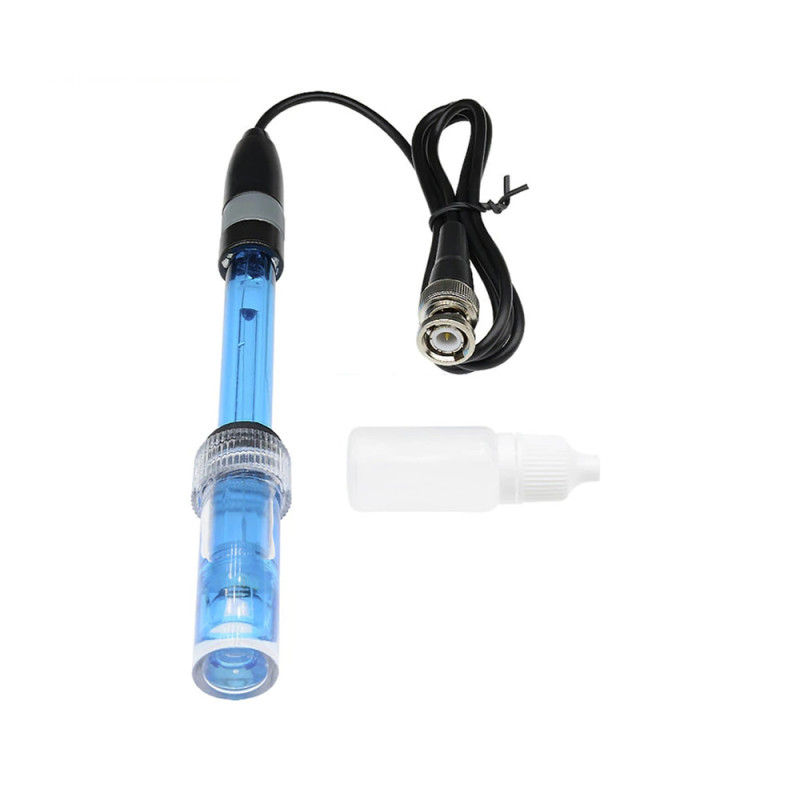
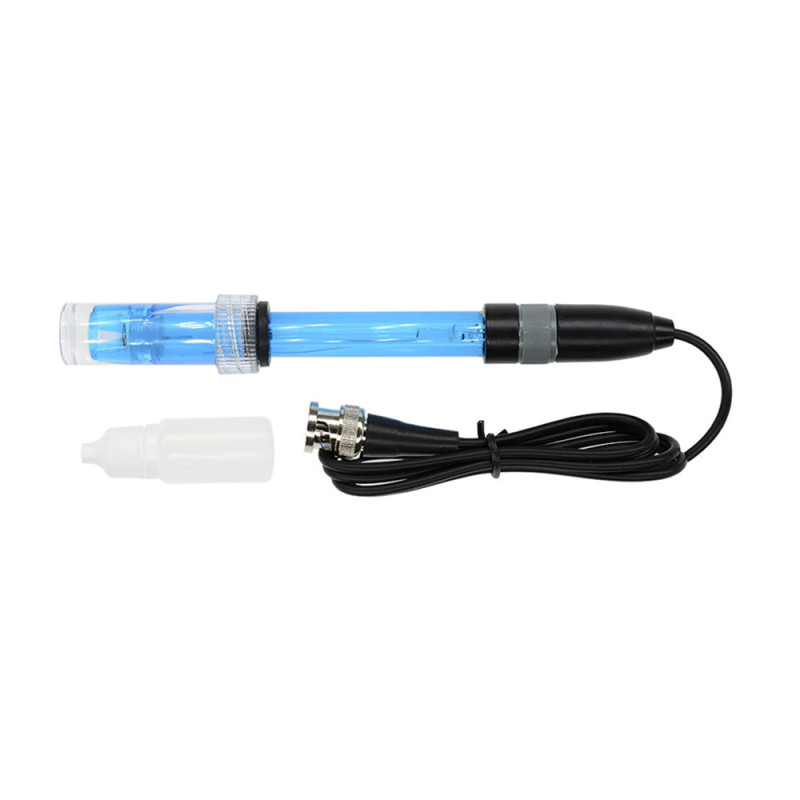
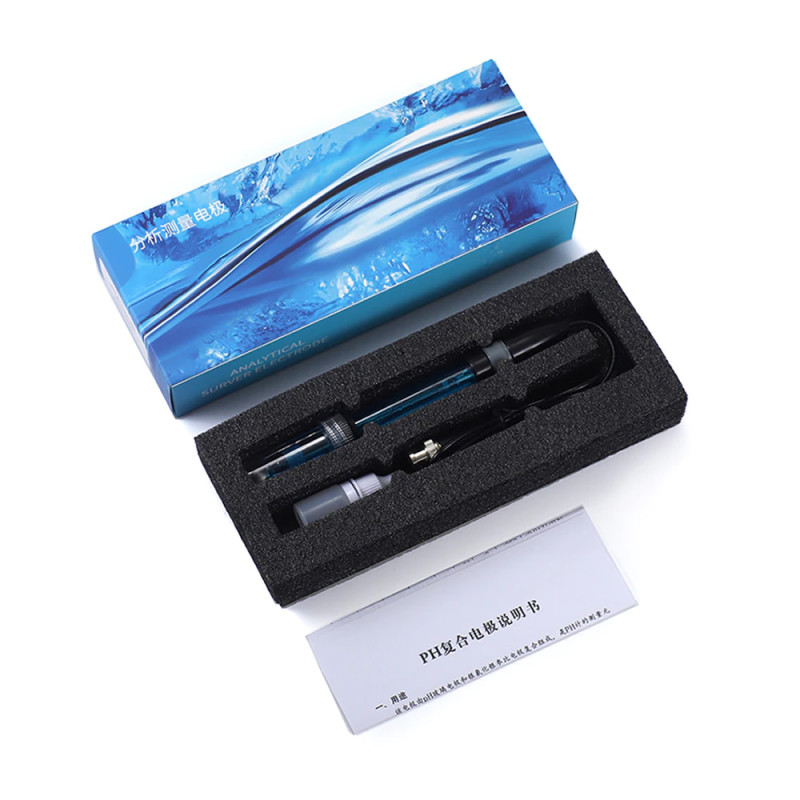
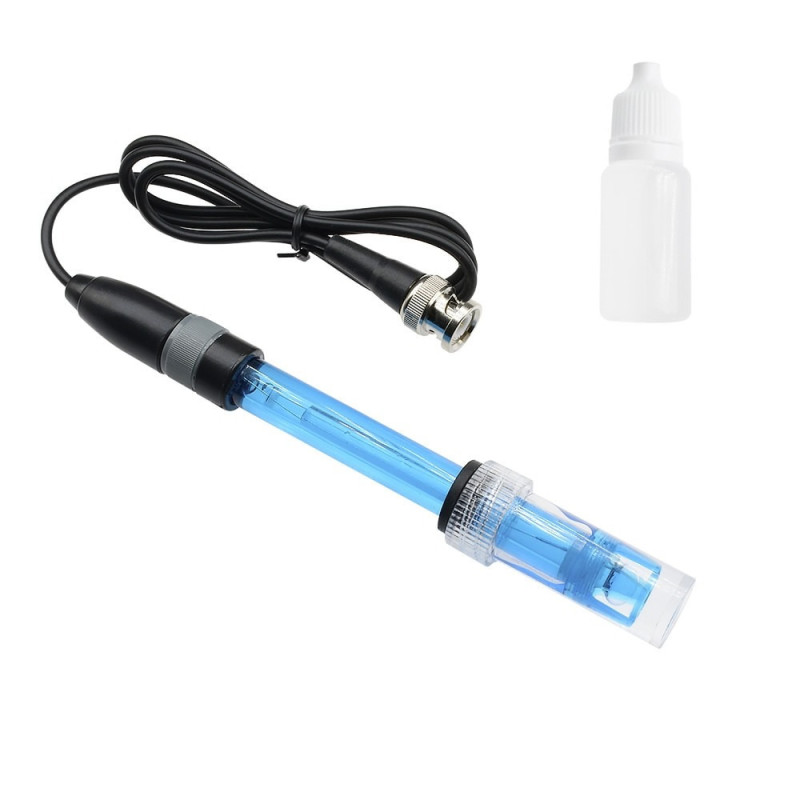
PH Electrode Sensor Probe E201-1C
Liquid Water 0-14Ph Detector BNC Socket Analog Ph Meter Test Aquarium Hydroponic Laboratory Acid Base
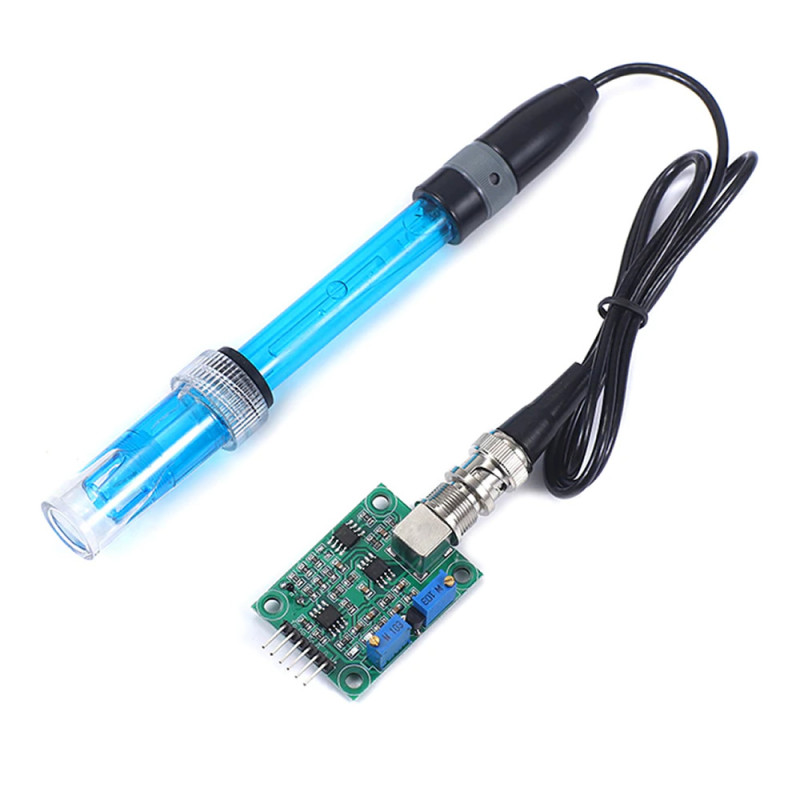
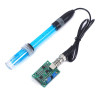
Only the probe is shipped. No electronic board is shipped with it.
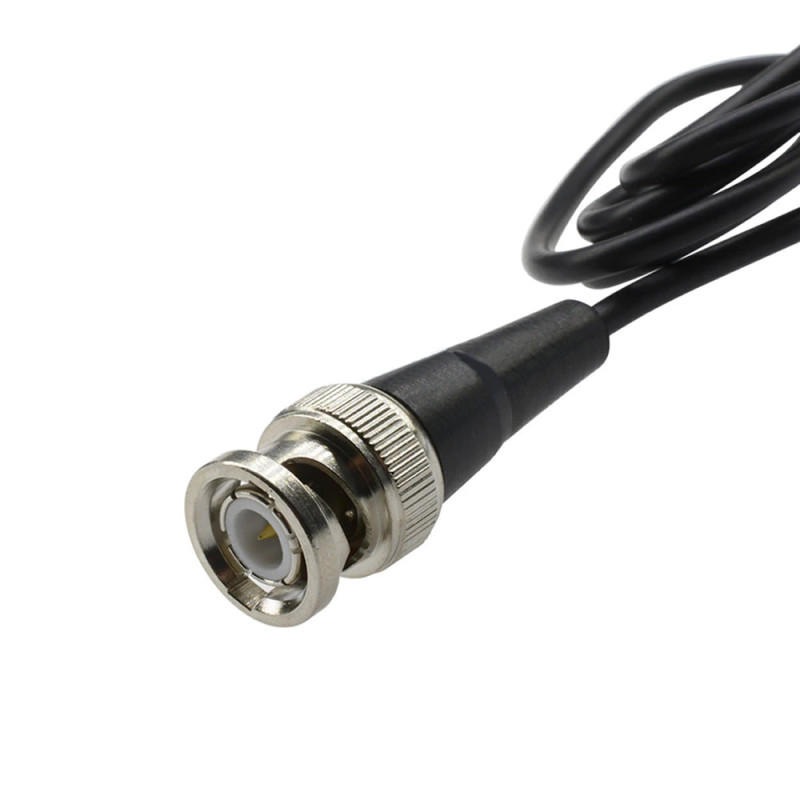
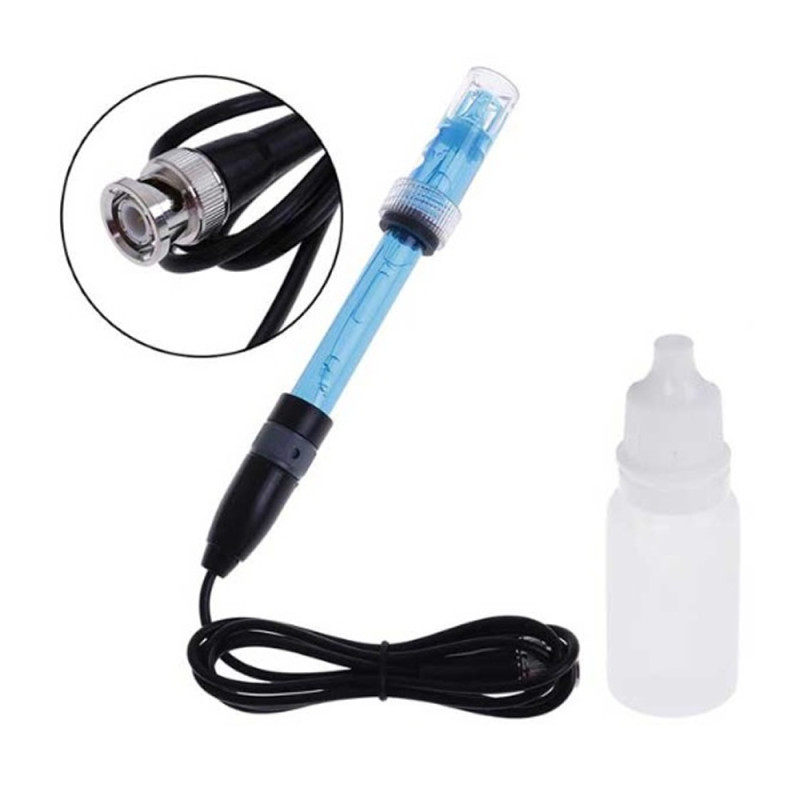
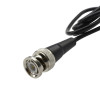
It is an electrode probe that can measure between 0-14ph. Theoretically, the ph value is measured according to the concentration of hydrogen ions. It allows instant ph value measurement to be made with high sensitivity. It has a bnc connection socket that fits many ph measuring devices. The cable length is 75cm. The sensor has a cylindrical structure.
Features:
- Ph measurement range: 0 / 14 PH
- Its BNC connector is suitable for most ph meters and controllers with BNC connectors.
- Suitable for a wide range of applications: aquariums, hydroponics, laboratory etc.
- Zero point: 7Ph +-0.5 ( 25C )
- Alkali error: 0.2PH 15mv and below
- Theoretical percentage slope: 97% and above ( 25C )
- Internal resistance: 250Mohm and below ( 25C )
- Response time: 1 minute and below
- Operating temperature: 0C / 60C
- Connection type: Bnc
- Probe length: 17cm
- Probe diameter: 17.5mm
- Cable length: approx. 75cm
- Weight: 50gr ( 100gr )
Package Contents:
- 1 Piece PH Electrode Probe E201-1C
The description below was taken from the internet. We do not know its accuracy.
Preparation before use
1. Slowly remove the protective bottle from the top of the electrode and set it aside for later use.
2. Use deionized water to clean the white sedimentary salt outside the electrode.
3. To maintain a proper penetration rate, the liquid level in the tube must immerse the tip of the spiral glass tube and exceed the sample liquid level by at least 1 inch (2.5cm). When using, place the electrode bulb completely into the measured liquid. Allow the bulb to fully contact the liquid to be tested in order to produce an ionic reaction effect.
4. Gently shake the electrode (just like a clinical thermometer) to remove the air bubbles on the electrode.
5. Keep the electrode in pH electrode storage solution for 1 hour. If there is no electrode storage solution, add 1gKCl to 200mL pH7 buffer as a temporary electrode storage solution. When the electrode is not in use, it can be equipped with a long-term protection solution to activate and protect the bulb tip. The preparation method can add 10mL of 3.3kcl solution to 200mL pH4 buffer solution. [3.3KCL is saturated potassium chloride, the configuration method weighs 23 grams of potassium klchloride and 100ml deionized water] an appropriate amount of preservative
Issues to be considered when using electrodes
1. Use fresh buffer
2. Open the electrode protective cap
3. Measure the gap and rinse the electrode with deionized water
4. Stir the buffer and the sample: a) always stir at the same speed; b) stir first, then measure
5. When preparing the pH electrode, rinse the electrode with distilled water before and after measurement. Use a lint-free cloth to absorb the excess water at the electrode tip to rub the electrode bulb, otherwise static electricity is produced, which interferes with accurate pH measurement.
6. Make sure the temperature of the buffer is the same as the sample. If the sample temperature is different, please use a temperature compensation probe for temperature compensation.
7. Check the electrode slope periodically with a two-point calibration method. When the electrode reading drops or the slope is lower than 92%, please refer to cleaning the electrode to clean the electrode.
Electrode maintenance
1. Cleaning the electrode
General cleaning solution-soak the electrode in 0.1M HCl or 0.1M HNO3 solution for 15 minutes and soak the electrode in electrode storage solution for 30 minutes.
2. The liquid junction is blocked (salt deposit)
Causes: hard water, mud, organic dirt, plankton microorganisms, algae etc. Due to the water permeable sand core around the bulb and ptfe, it causes the external reference electrode not to work properly.
Solution: Soak the electrode in hot water (60 ℃) for 15-20 minutes; Soak the electrode in a hot saturated KCl (60 ℃) solution for 20-30 minutes and cool to room temperature; Soak the electrode in pH 4 buffer solution for 20 to 30 minutes.
Check whether there are too many crystals, if so, rinse the crystals repeatedly with deionized water to check whether the flow rate is normal
If not, soak the electrode in hot water (60 ° c) for 15-20 minutes; Soak the electrode in hot saturated KCl (60 ° c) solution for 20-30 minutes, and cool to room temperature; Keep the electrode in pH 4 buffer for 30 minutes . Soak the electrode tip in concentrated hcl' for 5-10 minutes, rinse the electrode and check whether the electrolyte flow rate is normal. If the junction is still blocked, pull the junction (do not touch the glass bulb)
4. Deposition of inorganic substances on the pH sensitive membrane
Cause: inorganic sample measurement
Solution: Clean with EDTA, ammonia or acid
5. Dehydration of the pH sensitive membrane
Causes: improper storage, long-term use, operation at high temperature or strong alkaline solutions, resulting in slow and unstable response
Solution Active electrode
Soak the electrode in 0.1 M hcl' for 1 minute, rinse with tap water for 30 seconds, soak the electrode in 0.1 M koh' for 1 minute, rinse with tap water for 30 seconds, calibrate the test electrode with buffer solution, if it still does not work, repeat the above steps at most 3 times
6. The PH electrode is used for a long time and the electrode is not properly cleaned and protected in the tested environment, leading to unstable electrode data and other factors. Solution: after the electrode has been used for 2-3 months, perform a bulb cleaning operation on the electrode and an inspection operation on the liquid junction. Solution: remove the electrode from the environment to see whether there is any dirt on the surface of the bulb. If there is any dirt, wipe it with ethanol cotton and clean it with deionized water.
[Note that the bulb is fragile, be careful during the wiping process]. Then check the liquid junction to see whether there is any contaminant attached to the surface. If there is, you can use deionization to rinse it or you can shake the electrode back and forth in the measuring cup. If the water is not clean, change the water until the dirt disappears. Then wash the electrode and place it in activation solution for 8 hours, then measure in standard solution to restore the measurement state.